The Forest of Dean District Council (FoDDC) is under pressure. Mandated housing targets have forced the council to find space for an uplift of 600 new homes per year. We recognise the scale of this challenge, the difficult decisions our local representatives face, and the undeniable need for housing in the UK.
However, good planning is not simply about hitting numerical targets; it is about building sustainable, resilient communities in locations that make sense.
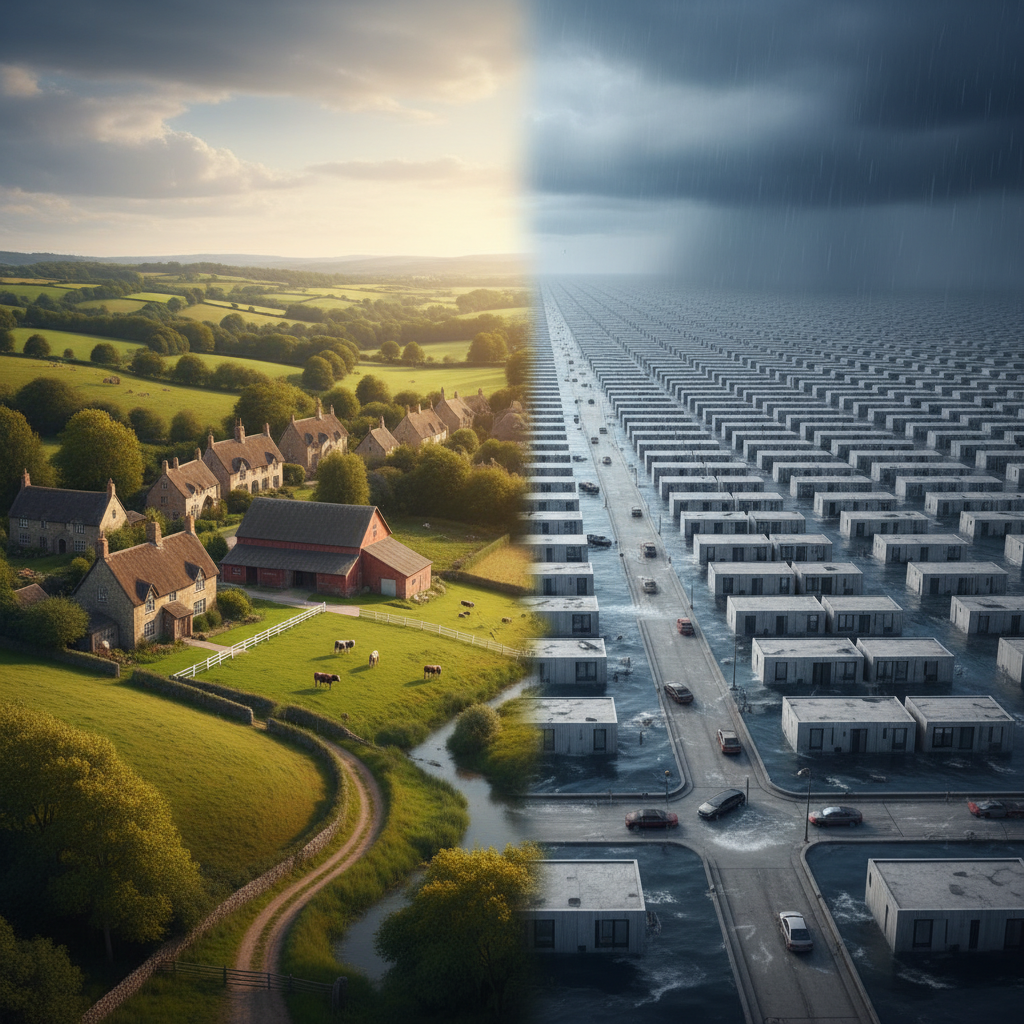
The current Revised Draft Local Plan proposes something that defies logic, sustainability, and planning best practice: the creation of a massive, 3,500-home settlement at Glynchbrook, nestled in the rural parish of Redmarley D’Abitot. This is not an expansion of a town. It is the parachuting of a small city into a remote, fragile rural landscape.
As a united community, we are drawing a line in the sand. We are not anti-housing; we are anti-bad planning. And Glynchbrook represents the worst kind of planning.
The Illusion of “Masterplanning”
The Council’s updated Sustainability Appraisal suggests that Glynchbrook is “not excluded” by their criteria, leaning heavily on the assumption that future masterplanning and clever design can resolve the site’s inherent constraints.
But good design cannot fix bad geography. There are fundamental characteristics of this location that no amount of architectural rendering or landscaping can overcome.
1. A Blueprint for Car Dependency
National planning policy is increasingly explicit: new developments must move away from car dependency and prioritise locations that genuinely support low-carbon, active travel, and public transport. Glynchbrook does the exact opposite.
The site is entirely remote from existing services and major employment hubs. It has zero rail access and severely limited bus provision. What it does have is close proximity to the M50 corridor. As a result, this settlement will inevitably function as a car-dependent commuter town.
Our initial modelling suggests that 3,500 homes in a rural setting will introduce roughly 6,000 to 7,000 new vehicles to our local road network. This translates to over 24,000 daily vehicle movements. Placing this kind of traffic burden onto rural B-roads and country lanes is not just irresponsible; it is dangerous. The draft plan vaguely mentions working with bodies to “improve the road network”, but this focuses heavily on site access rather than the wider, catastrophic implications for the surrounding region.
2. Irreversible Damage to Landscape and Heritage
Glynchbrook does not exist in a vacuum. The site lies directly in the setting of the Malvern Hills National Landscape. Development at this staggering scale would compromise the uninterrupted rural views that have defined this region for centuries, materially altering the character of an area of recognised national importance.
Furthermore, the site directly borders Lowbands – one of the most significant surviving Chartist settlements in the United Kingdom. The historic and cultural significance of Lowbands is deeply embedded in its quiet, rural setting. Surrounding it with modern urban sprawl would fundamentally erase that historical context. You cannot mitigate the destruction of heritage with a buffer zone of trees.
3. The Loss of Food Security
At a time when global supply chains are volatile, domestic agricultural resilience has never been more critical. The Glynchbrook site comprises highly productive agricultural land, including an established, fully operational dairy farm.
Concreting over this land permanently removes it from our national food production network. This is not simply a local grievance; it is a strategic error that aligns poorly with broader national concerns about sustainability and land use. Once productive topsoil is paved over, it is gone forever.
A Flawed Process and Better Alternatives
We are deeply concerned by the speed at which this allocation is being pushed through. Once a site of this magnitude is embedded into the Local Plan, it becomes a juggernaut that is nearly impossible to stop.
The tragedy is that this choice is not binary. The Council does not have to choose between missing housing targets and destroying Glynchbrook. There are significantly more sustainable alternatives available that better align with national planning frameworks.
Expansion to the east of Lydney, which benefits from an existing railway station, offers a genuinely sustainable option. Alternatively, the proposed settlement at Churcham – combined with the West Gloucester proposal in the emerging plan for Cheltenham, Gloucester, and Tewkesbury – creates the opportunity to deliver a well-connected, strategic settlement with the scale necessary to support high-quality public transport and self-containment.
The Fight Ahead: Why We Need Your Help
Experience across the country shows that Local Plans carrying forward sites with unresolved sustainability and deliverability issues face severe challenges, delays, and modifications at the Government Examination stage. It is costly for the Council and unsettling for communities. We are fighting to stop this before it reaches that point.
But to fight a council armed with planning departments and developers, we need our own experts.
This is why we have launched the United Against Glynchbrook Legal Expert Costs Fund. We urgently need to hire independent planning consultants, traffic modellers, and legal counsel to scrutinise the Council’s evidence base, highlight the fatal flaws in their Sustainability Appraisal, and present an undeniable case against Glynchbrook.
What you can do today:
- Donate: Please visit our GoFundMe Page and contribute whatever you can. Every pound goes directly towards hiring the professionals who can dismantle this flawed plan in the planning courts.
- Object: The public consultation runs from 4th February to 18th March. It is vital that every single adult in your household submits an individual objection.
- Show Up: Attend the consultation workshops at Redmarley Village Hall on 4th & 6th March (3:00 pm – 6:00 pm) to get help crafting your response.
We welcome a Local Plan that delivers homes in the right places, protects our climate, respects our heritage, and secures our agricultural future. Glynchbrook is not that place. Stand with your community, and let’s save our countryside.